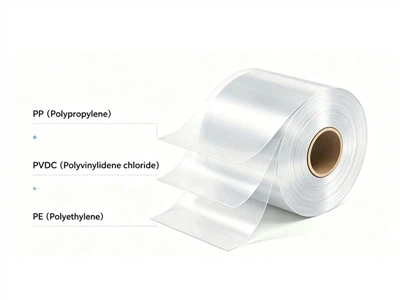
Thermoforming is a process in which films or sheets are shaped using pressure or vacuum-forming techniques to conform to the specific contours of a mold. The packaging industry has recognized the significant benefits of thermoforming film processes, utilizing them to create a variety of packaging products-such as containers, tubs, and other barrier films-for both food and non-food items, including those in the medical sector. Products such as dairy, meat, seafood, fresh produce, dry goods, and chocolate can be packaged using multi-layer co-extruded flexible barrier films. Furthermore, 9-layer, 7-layer, and 5-layer PA/EVOH-based thermoforming films are well-suited for a wide range of industrial packaging applications. They are also an ideal choice for storing both soft and rigid food and non-food products.
Types and Applications of Thermoforming Films
A variety of thermoforming films are currently produced, including:
Flexible thermoforming packaging films
9-layer, 7-layer, and 5-layer PA/EVOH-based thermoforming films
Rigid thermoforming films, among others
The design of a thermoforming film is tailored to specific industrial requirements, with variations in width, thickness, base materials, and sealing layers. These films offer a versatile solution for packaging food and rigid goods, supporting everything from highly automated production lines to customized packaging designs. Their high barrier properties and puncture resistance ensure both reliability and practicality.
Industrial Applications of Thermoforming Films
Below are some key industrial uses for thermoforming films:
Food Packaging – Due to their puncture resistance and low permeability, these films are highly favored in the food packaging industry. Additionally, because they retain their strength even at freezing temperatures, they are considered an excellent choice for packaging items such as chilled red meat and cheese.
Medical Packaging – With their superior mechanical properties and moisture-barrier capabilities, these films are ideally suited for packaging sterile medical products, including pharmaceuticals and medical devices. Applications of Thermoforming Technology in Other Packaging Sectors-Products manufactured via thermoforming-such as thermoformed films, plastic sheets, and blister packaging-are highly practical for packaging a wide range of items, including cosmetics, food, machinery, and pharmaceuticals. Furthermore, we offer ready-made packaging boxes to make the packaging process even more convenient.
Advantages of Thermoforming Technology
Thermoformed films offer numerous benefits to the packaging industry. Key advantages include:
Suitable for bulk packaging solutions in the food and medical sectors.
Provides moisture resistance.
Offers superior optical properties for base-forming films.
Provides a flexible solution for small-batch retail packaging.
Ensures a clean and hygienic appearance for packaged items.
Features puncture resistance, guaranteeing reliable packaging.
Ideally suited for packaging sharp objects.
Conclusion
Among the various types of flexible packaging films, thermoformed film remains one of the best choices for achieving reliable, moisture-resistant packaging, while also serving as a cost-effective solution.